

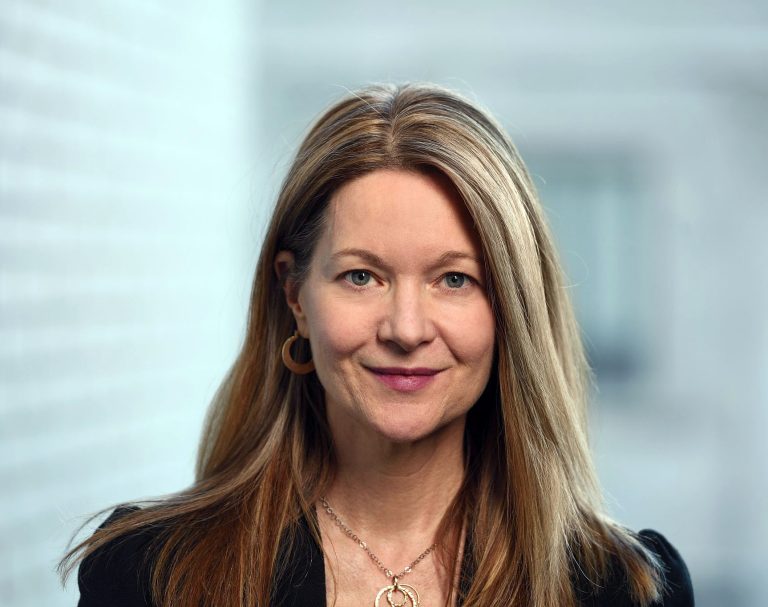
Home Institution: Johns Hopkins University
Fields: Public health, systems transformation
Current Positions:
- Professor, Johns Hopkins University School of Public Health & School of Medicine
- Director, Child and Adolescent Health Measurement Initiative
My Driving Question
How can we set in place sustainable partnerships, policies, and practices that intentionally promote whole child and family well-being with a focus on promoting early relational health and positive childhood experiences in the home, school, and community?
Scholar Project
Staying the Course to Build Flourishing Futures for Children, Youth and Families
Ensuring that every child is healthy, ready to learn, and on their optimal trajectory to a positively engaged adulthood is imperative for our nation and the planet. This imperative arises from the inherent value of children and their future health as adults, parents, and decision makers impacting societal, intergenerational, and planetary health. Many advances in science, technology, and human consciousness and awareness can be leveraged to meet this moment of transformation in society. Applying these advances to promote flourishing and relational health for all children and families must be prioritized and will require ongoing attention to the steps in the process, maintaining hope and enthusiasm in the field and building the right data and incentives to make it happen
Building on her contributions to advance a positive, whole child, family, and community approach to public health and health care for children, youth, and families, Dr. Bethell’s work as a Nova Scholar will focus on measurement, new research, and scaling evidence-based models and innovations. She will build on her leadership in national initiatives such as the 2024 National Academies of Sciences, Engineering, and Medicine’s Launching Lifelong Health report, the Engagement in Action Framework (EnAct!) for statewide integrated early childhood health systems, the Prioritizing Possibilities national agenda, and the Cycle of Engagement Well Visit Planner (COE/WVP) model and information technology tools for frontline prevention. She will collaborate with other Nova Scholars and stakeholders to accelerate impact during this time of national attention to child and family flourishing and possibilities for progress. She will hold the vision for whole health, flourishing, relational health, and engagement in life that this work is based on.
A Vision for the Next Decade
A decade from now, the United States will have built on traditional knowledge and the evidence regarding early life experiences, human development, and disease prevention to provide comprehensive, family-engaged, community-integrated, and equitable care focused on optimizing the healthy development and lifelong well-being of all children, youth, and their families. Cross-sectoral efforts will equitably promote flourishing, build on community strength, and address family and community needs to create the safe, stable, and nurturing relationships and environments that all children need to thrive. The major causes of child and adolescent morbidity and mortality and the lived knowledge and expressed needs of children, youth, and families will guide the priorities for how systems allocate resources to achieve this vision.
Biography
Christina Bethell is a professor at Johns Hopkins University in the Bloomberg School of Public Health and School of Medicine where she advances a new science of thriving to promote the early and lifelong health of children and families. Her research focuses on building and translating the science of healthy development and the development and application of family centered data and tools to inform and drive positive systems improvements.
Dr. Bethell is the founding director of the Child and Adolescent Health Measurement Initiative which, since 1996, has developed and advanced to national, state, and local use an array of standardized child and family health and system performance measures, including measures on family centered care, care coordination, developmental screening, adverse childhood experiences, positive childhood experiences, family resilience and connection, child flourishing, and an integrated Whole Child Risk Index. Her research has shaped policy including the national Prioritizing Possibilities agenda to prevent and address adverse childhood experiences and promote child health equity. She has been featured on National Public Radio, provided testimony to the U.S. Congress, published dozens of peer reviewed studies focused on informing policy, practice, and culture change, and has contributed to national efforts that promote relational health as the cornerstone of well-being for children, families, and communities.
Dr. Bethell earned an MBA and an MPH from the University of California, Berkeley and a PhD in public policy and health services research from the University of Chicago. She dances, writes poetry and believes the authentic connection with ourselves, others, and life is the source of our creativity and joy.
Education and Training
- Irving B. Harris Public Policy Fellowship, University of Chicago
- David A. Winston Health Policy Fellowship, Washington, D.C.
- Coro Foundation Public Affairs Fellowship, Los Angeles, CA
- PhD, Public Policy and and Health Services Research, University of Chicago
- MPH, University of California, Berkeley
- MBA, University of California, Berkeley
- BA, double major in psychobiology and business administration, University of California, Los Angeles
Selected Honors
Johns Hopkins Bloomberg School of Public Health Dean’s Award for Excellence in US Public Health Practice, 2023
Richard D. Krugman Award, National Foundation to End Child Abuse and Neglect (EndCAN), 2022
John MacQueen Award, Association of Maternal and Child Health Programs, 2017
MCH National Outstanding Leadership Award, 2012
National Health 2.0 REACH Award; Finalist for Health IT to Improve Population Health for the Well Visit Planner Innovation. Awarded by the Office of the National Coordinator for Health IT and Academy Health, 2012
Family Voices National Angel Award, 2001
Stull Award, University of California, Berkeley, 1991
Annual Leadership Award, Women Health Care Executives of Northern California, 1990
Vision Award, Los Angeles Area Chamber of Commerce, Yearly Award to Recognize Youth Leaders, 1981
Selected Publications
- Scaling Family Voices and Engagement to Measure and Improve Systems Performance and Whole Child Health: Progress and Lessons from the Child and Adolescent Health Measurement Initiative. Maternal and Child Health Journal, 2023.
- Toward measurement for a whole child health policy: Validity and national and state prevalence of the Integrated Child Risk Index. Academic Pediatrics, 2022.
- Social and Relational Health Risks and Common Mental Health Problems Among U.S. Children: The mitigating role of family resilience and connection to promote socio-emotional and school outcomes. Child and Adoloscent Psychiatric Clinics of North America, 2022.
- Positive Childhood Experiences and Adult Mental and Relational Health in a Statewide Sample Associations Across Adverse Childhood Experiences Levels. JAMA Pediatrics, 2019.
- Family Resilience and Connection Promote Flourishing Among U.S. Children, Even Amid Adversity. Health Affairs, 2019.
- Prioritizing Possibilities for Child and Family Health: An Agenda to Address Adverse Childhood Experiences and Foster the Social and Emotional Roots of Well-being in Pediatrics. Academic Pediatrics, 2017.
- The New Science of Thriving: Our well-being—individually and as a society—depends on mindfulness. Johns Hopkins Public Health magazine, 2016.
- Taking Stock of the CSHCN Screener: Key Questions and Current Reflections. Academy of Pediatrics, 2016.
- Optimizing health and health care systems for children with special health care needs using the life course perspective. Maternal and Child Health Journal, 2014.
- Engaging families (and ourselves) in quality improvement: an optimistic and developmental perspective. Academic Pediatrics, 2013.


