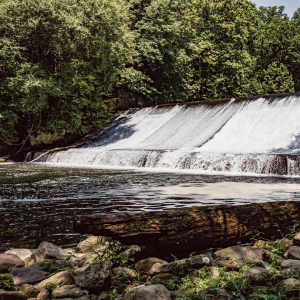
How Tearing Down Small Dams Is Helping Restore Northeast Rivers
For Yale Environment 360, Nova Media Fellow Lela Nargi reports on efforts to dismantle small dams throughout the Northeast and, in turn, restore rivers, streams, and wildlife.
Led by distinguished Nova Scholars and Fellows, our collaborative centers are transdisciplinary hubs advancing leading-edge research and implementing innovative solutions for today’s most pressing challenges.
The Nova Institute for Health’s Media Fellowship program aims to increase public understanding of the complex, intertwined connections between the health of people, places, and the planet. Media Fellows explore the many factors that promote well-being, prevent disease, contribute to healing, and increase an individual’s ability to flourish and live a fulfilling life.

For Yale Environment 360, Nova Media Fellow Lela Nargi reports on efforts to dismantle small dams throughout the Northeast and, in turn, restore rivers, streams, and wildlife.

Nova Media Fellow Maria Parazo Rose reports in Grist about how a misfiled 19th century treaty caused significant land loss for the Yakama Nation, impacting health, well-being, and cultural preservation.

Nova Media Fellow Kate Morgan reports for the New York Times about how the “health freedom” movement, with views that often oppose scientific consensus and established medical practices, is increasingly closer to power.

Nova Media Fellow Virginia Gewin reports for Civil Eats on the connections between agriculture runoff in the Salton Sea and rising area respiratory illnesses.

Nova Media Fellow Lela Nargi reports for Knowable Magazine on how a changing climate is making water scarcity a reality for many farmers — is desalination for agricultural water supplies an answer?

In Grist, Nova Media Fellow Kate Morgan reports on the growing threat of wildfire in the Southeast, and how Indigenous communities are helping to prevent wildfires and restore the land, including through controlled burns.
Nova Media Fellow Lela Nargi reports in Ambrook Research about efforts to shift crop production away from California as farmers…
In Prism Reports, Nova Media Fellow Lela Nargi reports on the mental and physical health risks from water poverty faced…
Nova Media Fellow Virginia Gewin reports for Civil Eats on the merging concerns of vehicle tire microplastic and chemical pollution…
For Ambrook Research, Nova Media Fellow Kate Morgan reports on how farmers are going back in time to address rising…
Nova Media Fellow Lela Nargi reports for The Guardian on the state of water quality and access in U.S. schools…
Nova Media Fellow Virginia Gewin examines in Vox how the planet's climbing temperatures increase risks for pregnancy complications and premature…
Nova Media Fellow Lela Nargi reports for The Guardian on megadroughts forcing an end to Texas sugarcane farming, just one…
Nova Media Fellow Lela Nargi reports in Ambrook Research on a New York community fighting for the health of their…
Nova Media Fellow Kate Morgan reports in The Guardian on an Appalachian community seeking justice after a mountaintop mining retention…

Healing is facilitated through safety, persistence, and trust.

Resources support us as we heal. They include reframing, responsibility, and positivity. “Making connections enabled participants to acquire and refine resources and skills that were essential in their healing journey. People also brought their own personal strengths to the journey.”

“Connection to others was an essential part of all the healing journeys.” Humans are social creatures, and even the most introverted of us need close relationships. Friends and family add meaning and value to life and help support us, in good times and bad.
When we experience relational trauma, relationships can feel scary, but reestablishing safety and trust in relationships is where the healing happens. (To be clear, we do not mean reestablishing safety and trust with abusers, but rather finding other healing relationships.)
“When safety and trust had been established, people were able to connect with helpers. The nature of the behaviours of helpers that fostered healing ranged from small acts of kindness to unconditional love.”

Healing probably means different things to different people, but one definition that emerged from the study is: “The re-establishment of a sense of integrity and wholeness.”
Healing was an emergent property that resulted from each individuals’ complex healing journey, a result of bridged connections between resources and relationships. “…they gradually found relief from suffering and began to exhibit emergent characteristics: a sense of hope, self-acceptance, and a desire to help others—the immediate precursors to healing.”
In varying degrees, “they were able to transcend their suffering and in some sense to flourish.”

Suffering is the ongoing pain from wounding.
There is some debate about whether people always experience suffering on the path to healing.

Wounding happens when we experience physical or emotional harm. It can stem from chronic illness or by physical or psychological trauma for which we do not have the tools to cope, or a combination of those factors.
“The degree and quality of suffering experienced by each individual is framed by contextual factors that include personal characteristics, timing of their initial or ongoing wounding in the developmental life cycle and prior and current relationships.”
Characteristics: How predisposed someone may be to wounding/how many tools and resources someone may have to deal with trauma/illness.
Lifestages: Developmental timing plays an important role in the impact of trauma — young children often do not have the same resources as older adults.
Relationships: Relationships can provide solace and support for those suffering, while lack of healthy relationships can prolong suffering.