Search

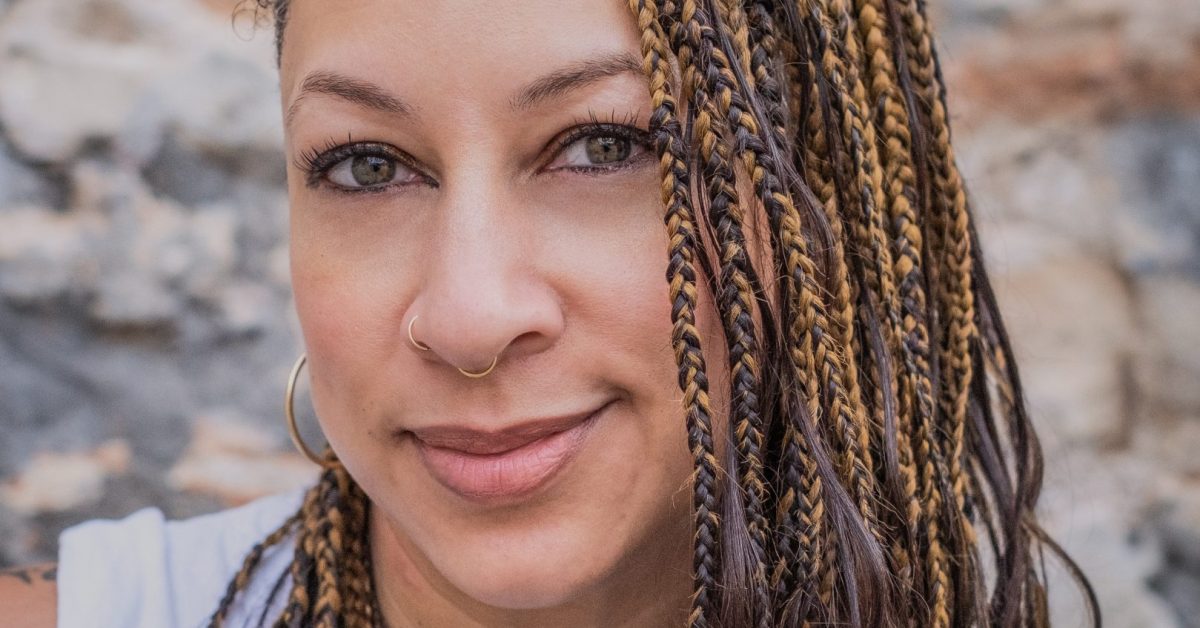
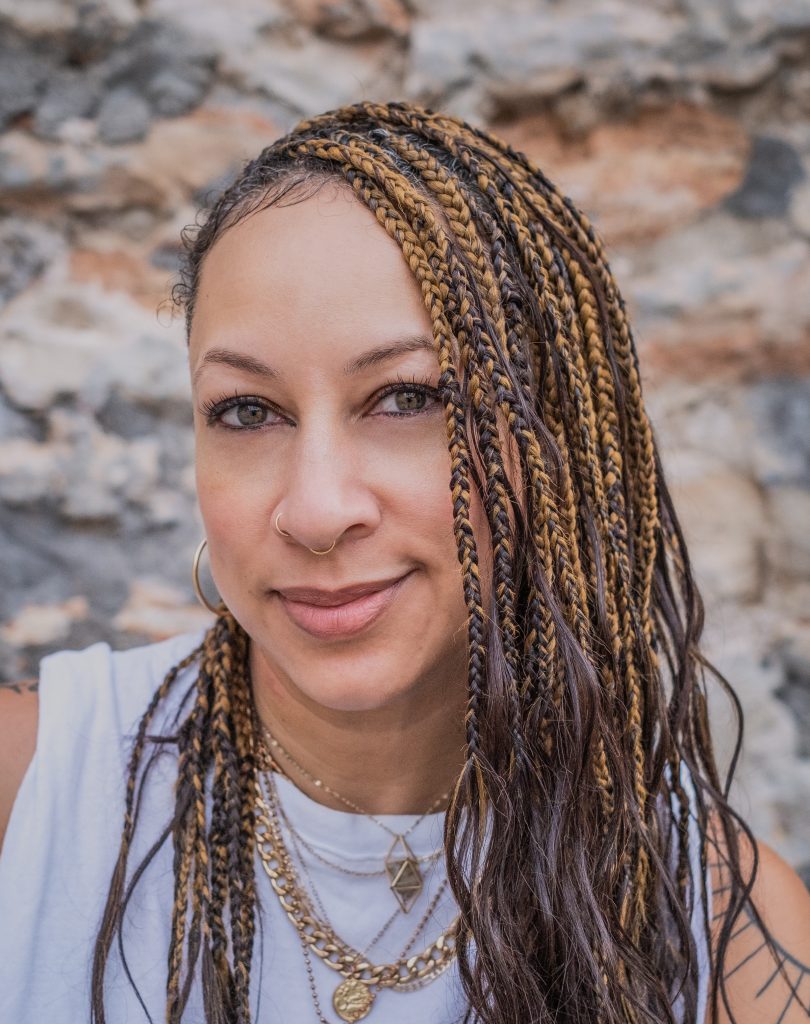
Tara Pixley

_TLPIX_Barcelona_EDITED
2026 Nova Media Fellow

Tara Pixley, PhD, is a queer, Jamaican-American visual journalist and media innovation strategist whose visual work frames race, gender, climate futures, LGBTQ+, and immigrant communities through a solutions lens. Her work has been published by the New York Times, Wall Street Journal, Washington Post, Apple, The North Face, NPR, Newsweek, The Atlantic, HuffPost, Allure, ProPublica, and ESPN, among many others. She is a Fulbright Specialist in Visual Media and has been named a Reynolds Journalism Innovation Fellow, Pulitzer Center Grantee, IWMF NextGen Fellow & Gwen Ifill Fellow, World Press Photo Solutions Visual Journalism Initiative grantee, and a Knight Visiting Nieman Fellow at Harvard. 

Tara previously served as vice president of National Press Photographers Association (NPPA) and currently serves on the boards of Stocksy United and Photography Ethics Centre. She is associate partner/co-founder of Aegis Safety Alliance and executive director/co-founder of Authority Collective, an organization dedicated to establishing access and equity for marginalized visual storytellers in media industries. She co-authored the 2025 book Critical Photojournalism: Contemporary Ethics & Practices with Judy Walgren.

Media Fellowship Project

Tracing the health toll of incarceration on Black mothers and their families in Los Angeles, and investigating reforms already working elsewhere that could bring healing within reach in California.

Los Angeles County operates the largest jail system in the United States, and Black women—especially mothers—are disproportionately incarcerated within it. Although overall U.S.  incarceration rates have been falling, women’s incarceration rates remain at near-historic highs, according to the Prison Policy Initiative’s September 2025 report. In California, Black residents are incarcerated at nearly nine times the rate of white residents, and the majority of women in California’s prisons are mothers. Severed family bonds fuel intergenerational trauma: Incarcerated women face elevated rates of post-traumatic stress disorder, postpartum depression, and anxiety, all compounded by separation from their children. Yet no sustained visual journalism project has examined these intersecting crises through the specific lens of Black motherhood in California.

Beyond Bars, Tara’s Media Fellow project, centers a question at once journalistic and restorative: What does healing actually look like for incarcerated and formerly incarcerated Black mothers and their families, and what reforms, already working in other states and systems, could be scaled in California to make that healing possible? This project directly aligns with Nova’s priority area of mental health, well-being, and justice in all its forms, including emerging paradigms for compassion and dignity in carceral and legal systems. It connects health to upstream social determinants including race, gender, economic precarity, institutional policy, and traces how those forces shape the bodies, minds, and family bonds of some of California’s most underserved women.

In 2024, California voters approved Proposition 1, a $6.4 billion mental health bond that promises expanded behavioral health and housing services, with some funding designated for justice-impacted populations. Beyond Bars will investigate whether and how those funds are reaching incarcerated and formerly incarcerated Black mothers while foregrounding proven solutions that could change the current outcomes.

Media Fellow Publications

The Sonic Commons

Reasons to be Cheerful explores how environmental noise impacts our health, and how we can design spaces that sound the way we want them to.

Read More »
Education and Training
  • PhD, UC San Diego

  • MFA, Savannah College of Art & Design

  • BS, Florida A&M University

Selected Honors
  • Fulbright Specialist in Visual Media
  • Excellence in Photojournalism Award, NLGJA, 2026
  • Center for Advanced Internet Studies, Working Group Grant (Convener), 2026
  • Loretta C. Duckworth Scholars Studio Faculty Fellowship, 2025-2026
  • Gwen Ifill Fellow, Intl. Women’s Media Foundation (IWMF), 2025
  • Reynolds Journalism Institute Fellowship, 2022-2023 
  • Eyewitness Photojournalism Grant, The Pulitzer Center, 2022
  • President’s Award, National Press Photographers Association, 2021
  • Solutions Visual Journalism Initiative Grant, World Press Photo, 2019
  • Knight Visiting Nieman Fellow, Harvard University, 2016
  • Challenge America Grant, National Endowment for the Arts, 2015
Selected Publications

Healing is facilitated through safety, persistence, and trust.

  • Persistence: “People did not simply progress through this sequence and experience healing. The healing journey was a recursive, back and forth process. They found helpers, used the skills/resources that those helpers provided, found other helpers that provided more resources and used those skills and resources. As this process continued, people experienced a gradual amelioration of their suffering. Although many despaired at times, all demonstrated the quality of persistence—they refused to give up.”
  • Safety & Trust: “To connect to helpers, it was essential for people to feel safe in those relationships and able to trust that the person would be a helper and not a barrier to healing. Persons whose wounds included a violation of trust were especially careful about testing the safety of new relationships.”

Resources support us as we heal. They include reframing, responsibility, and positivity. “Making connections enabled participants to acquire and refine resources and skills that were essential in their healing journey. People also brought their own personal strengths to the journey.”

  • Reframing: “A particularly important skill was the ability to reframe—that is to look at suffering through a different lens.” This does NOT mean minimizing trauma or pain, but rather it often means the opposite: understanding what happened was wrong, unfair, or uncontrollable and that we are not to blame for it.
  • Responsibility: While we don’t have control over what happened to us, we are the only ones who can help ourselves heal. “A third essential resource that people acquired or refined was the ability to take an appropriate amount of responsibility for their healing journeys. They participated actively in the process of healing. Once again, some participants already had developed this skill, and some acquired or refined it from their helpers.”
  • Positivity: “Another resource that people acquired or refined during their healing journey was choose to be positive—that is to have some optimism about their situation.” People have varying predispositions to positivity. In the study, positivity was important in helping people heal. This doesn’t mean a toxic positivity, but rather simply finding some good in life and feeling hopeful about our situations.

“Connection to others was an essential part of all the healing journeys.” Humans are social creatures, and even the most introverted of us need close relationships. Friends and family add meaning and value to life and help support us, in good times and bad. 

When we experience relational trauma, relationships can feel scary, but reestablishing safety and trust in relationships is where the healing happens. (To be clear, we do not mean reestablishing safety and trust with abusers, but rather finding other healing relationships.) 

“When safety and trust had been established, people were able to connect with helpers. The nature of the behaviours of helpers that fostered healing ranged from small acts of kindness to unconditional love.”

  • “Moving from being wounded, through suffering to healing, is possible. It is facilitated by developing safe, trusting relationships and by positive reframing that moves through the weight of responsibility to the ability to respond.”
  • “Relationships with health professionals were among these but were not necessarily any more important to the healing journey than other kinds of helpers, which included family members, friends, spirituality and their God, pets, support groups, administrators, case workers and supervisors.”

Healing probably means different things to different people, but one definition that emerged from the study is: “The re-establishment of a sense of integrity and wholeness.” 

Healing was an emergent property that resulted from each individuals’ complex healing journey, a result of bridged connections between resources and relationships. “…they gradually found relief from suffering and began to exhibit emergent characteristics: a sense of hope, self-acceptance, and a desire to help others—the immediate precursors to healing.”

 In varying degrees, “they were able to transcend their suffering and in some sense to flourish.” 

  • Helping Others: We find meaning in helping others. “Understanding that suffering gives the strength and experience to help others in similar situations.”
  • Hope: We begin to have hope that we will not always feel this bad. A Crohn’s patient said, “I think gradually I realized that I was going to feel better. I did have days when I actually didn’t vomit, when I did feel better. And I think gradually I came to believe that maybe I could have a normal life again.”
  • Self-Acceptance: We see our inherent value and understand that we are not to blame for our suffering. A participant living with HIV said, “I’m really proud of myself. I think that now I still want to live. I don’t want to die, and I really love myself a lot. I have a lot of comfort in myself.”

Suffering is the ongoing pain from wounding. 

There is some debate about whether people always experience suffering on the path to healing.

Wounding happens when we experience physical or emotional harm. It can stem from chronic illness or by physical or psychological trauma for which we do not have the tools to cope, or a combination of those factors. 

“The degree and quality of suffering experienced by each individual is framed by contextual factors that include personal characteristics, timing of their initial or ongoing wounding in the developmental life cycle and prior and current relationships.”

Characteristics: How predisposed someone may be to wounding/how many tools and resources someone may have to deal with trauma/illness.

Lifestages: Developmental timing plays an important role in the impact of trauma — young children often do not have the same resources as older adults.

Relationships: Relationships can provide solace and support for those suffering, while lack of healthy relationships can prolong suffering.