Search

The Earthrise Community

Our journey into the universe turned our awareness inward, to our own condition and that of our living planet—a shift in consciousness that we must now deepen to solve our greatest challenges.

The Earthrise Community is a global, contemplative coalition inspiring spiritual and cultural transformation for a new era of planetary consciousness. We aim to cocreate new narratives and deepen emotional and spiritual connections for meaningful change. We provide a visionary space to nurture action rooted in love and kindness, wisdom and compassion, hope and faith—recognizing that change is driven as much by the heart of our shared humanity as by logic alone.

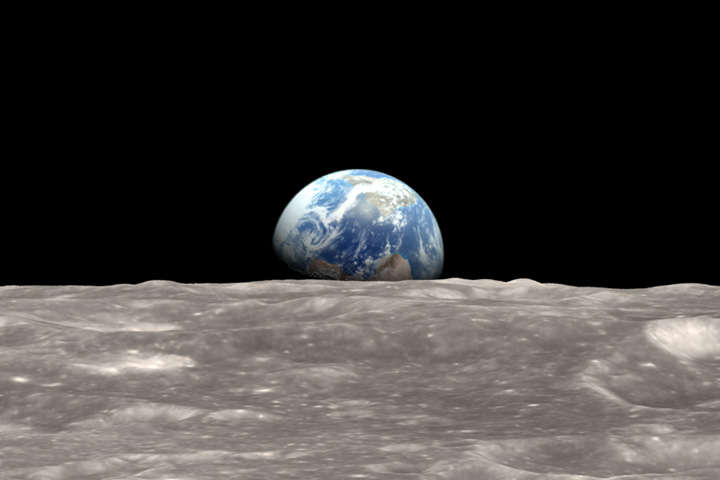
The iconic Earthrise photograph, taken in 1968 from Apollo 8, became one of the most significant images of the twentieth century, awakening a deep, collective awareness of our shared home and the potential of human unity. One planet. For all.

This shift in consciousness inspired many modern social, environmental, and spiritual movements and serves as the inspiration for our community.

The Earthrise Community is led by the Nova Institute for Health in collaboration with the Planetary Health Alliance.

Transforming Planetary Consciousness for a Flourishing Future

“The cosmos is within us. We are made of star-stuff. We are a way for the universe to know itself.” — Carl Sagan

The Earthrise Community cultivates deeper connection and creative exploration for individual and community awakening where imagination and bold ideas shape fresh outlooks toward a flourishing future.

Our mission is to curate meaningful and creative conversations that elevate spiritual perspectives and emotional connections, recognizing their vital role in addressing our grand challenges. 

We envision holistic approaches integrated into wider discourse, enriching scientific discovery and guiding wise action to address challenges facing people, places, and our planet. Through dialogue, practice, and collective inquiry, we explore emergent ways of being that nurture deeper connection, shared responsibility, and values that support flourishing for all.

We encourage open-minded, heart-centered activities that honor reverence for life alongside academic insights for holistic perspectives. Our non-sectarian approach uplifts humanity’s core values—love, hope, kindness, compassion, respect, and collaboration—without any specific faith or ideology. We provide an open, non-judgmental space for diverse perspectives, enriching understanding and amplifying common threads.

We welcome diverse voices from all disciplines, traditions, and geographies to join us in creating a community of care—one that normalizes mutualistic approaches and elevates creativity, imagination, and self-development in solving complex challenges at all scales.

Our Work

Rooted in the principles of collective creation and collaborative emergence, this project is intended to be self-evolving. We facilitate engagement, participation, and belonging, through a series of activities aligned with these core aims:

Connecting and convening: We are building a diverse community committed to fostering positive change through shifting paradigms and exploring creative expressions that highlight the interconnectedness of all life. We also support the formation of smaller, like-minded groups exploring specific issues and encourage existing aligned groups to contribute, creating common ground for collaboration.

Cocreating: We inspire mutualistic worldviews through the cocreation of narratives, artistic works, contemplative practices, and activities that foster reciprocity and flourishing. This involves not just challenging outdated paradigms but also cultivating hope through stories of possibility and renewal.

Communicating: We seek to broaden perspectives for meaningful change by:

  • Seeding these ideas into broader discourse across disciplines and sectors, fostering dialogue between sciences and humanities;
  • Elevating creativity and spirituality as essential to personal well-being, thriving communities, and the collective emergence of planetary consciousness; and
  • Exploring diverse channels to amplify and share creative works, ideas, and initiatives. 

By energizing meaningful connections, we support both individual growth and collective momentum for transformative change. This reflects the power of building a critical mass—where shared attitudes, behaviors, and collective consciousness drive profound societal shifts—especially when fueled by love and inspiration.

Featured Publication
The Earthrise Community: Transforming Planetary Consciousness for a Flourishing Future
in Challenges

Our History

The origins of our community trace back to 2012, when Professor Susan Prescott launched inVIVO Planetary Health, a global network through the Worldwide Universities Network. This initiative promoted transdisciplinary and ecological approaches to health, aiming to transform individual, community, and planetary well-being through deeper awareness and collaborative change. This vision was formally articulated in the Canmore Declaration: Statement of Principles for Planetary Health (2018), which emphasized relationality, values, purpose, self-awareness, cultural competency, critical consciousness, and spirituality in planetary health.

In 2019, the initiative called Project Earthrise was created in collaboration with the Nova Institute for Health to advance these principles through conferences, academic papers, and working groups. This project explored how imagination, kindness, and creativity could inspire transformative action, as explored in our narrative review, Project Earthrise: Inspiring Creativity, Kindness and Imagination in Planetary Health. inVIVO Planetary Health’s Project Earthrise Conference in 2020 reinforced the need to integrate social and spiritual ecology into planetary health, a vision echoed in initiatives such as the Planetary Health Alliance’s Constellation Project, led by Dr. Sam Myers and Terry Tempest Williams.

At the 2022 Planetary Health Annual Meeting at Harvard University, a growing call emerged for greater emphasis on spirituality, creativity, and emotional connections in tackling global challenges. In response, a new contemplative community of practice was established in December 2022, providing a dedicated space for deep connection and dialogue. Convening monthly, we built on the shared philosophies of Project Earthrise and the Constellation Project—collaboration rooted in relationality, creativity, and spirituality for planetary stewardship—to create what is now the Earthrise Community.

While contemplative practices are deeply personal, meaningful connections with others help cultivate inner development and collective momentum for change. The Earthrise Community exists to nurture a critical mass of shared consciousness—where communal awareness and inspired action can drive profound societal shifts toward a flourishing future.

Healing is facilitated through safety, persistence, and trust.

  • Persistence: “People did not simply progress through this sequence and experience healing. The healing journey was a recursive, back and forth process. They found helpers, used the skills/resources that those helpers provided, found other helpers that provided more resources and used those skills and resources. As this process continued, people experienced a gradual amelioration of their suffering. Although many despaired at times, all demonstrated the quality of persistence—they refused to give up.”
  • Safety & Trust: “To connect to helpers, it was essential for people to feel safe in those relationships and able to trust that the person would be a helper and not a barrier to healing. Persons whose wounds included a violation of trust were especially careful about testing the safety of new relationships.”

Resources support us as we heal. They include reframing, responsibility, and positivity. “Making connections enabled participants to acquire and refine resources and skills that were essential in their healing journey. People also brought their own personal strengths to the journey.”

  • Reframing: “A particularly important skill was the ability to reframe—that is to look at suffering through a different lens.” This does NOT mean minimizing trauma or pain, but rather it often means the opposite: understanding what happened was wrong, unfair, or uncontrollable and that we are not to blame for it.
  • Responsibility: While we don’t have control over what happened to us, we are the only ones who can help ourselves heal. “A third essential resource that people acquired or refined was the ability to take an appropriate amount of responsibility for their healing journeys. They participated actively in the process of healing. Once again, some participants already had developed this skill, and some acquired or refined it from their helpers.”
  • Positivity: “Another resource that people acquired or refined during their healing journey was choose to be positive—that is to have some optimism about their situation.” People have varying predispositions to positivity. In the study, positivity was important in helping people heal. This doesn’t mean a toxic positivity, but rather simply finding some good in life and feeling hopeful about our situations.

“Connection to others was an essential part of all the healing journeys.” Humans are social creatures, and even the most introverted of us need close relationships. Friends and family add meaning and value to life and help support us, in good times and bad. 

When we experience relational trauma, relationships can feel scary, but reestablishing safety and trust in relationships is where the healing happens. (To be clear, we do not mean reestablishing safety and trust with abusers, but rather finding other healing relationships.) 

“When safety and trust had been established, people were able to connect with helpers. The nature of the behaviours of helpers that fostered healing ranged from small acts of kindness to unconditional love.”

  • “Moving from being wounded, through suffering to healing, is possible. It is facilitated by developing safe, trusting relationships and by positive reframing that moves through the weight of responsibility to the ability to respond.”
  • “Relationships with health professionals were among these but were not necessarily any more important to the healing journey than other kinds of helpers, which included family members, friends, spirituality and their God, pets, support groups, administrators, case workers and supervisors.”

Healing probably means different things to different people, but one definition that emerged from the study is: “The re-establishment of a sense of integrity and wholeness.” 

Healing was an emergent property that resulted from each individuals’ complex healing journey, a result of bridged connections between resources and relationships. “…they gradually found relief from suffering and began to exhibit emergent characteristics: a sense of hope, self-acceptance, and a desire to help others—the immediate precursors to healing.”

 In varying degrees, “they were able to transcend their suffering and in some sense to flourish.” 

  • Helping Others: We find meaning in helping others. “Understanding that suffering gives the strength and experience to help others in similar situations.”
  • Hope: We begin to have hope that we will not always feel this bad. A Crohn’s patient said, “I think gradually I realized that I was going to feel better. I did have days when I actually didn’t vomit, when I did feel better. And I think gradually I came to believe that maybe I could have a normal life again.”
  • Self-Acceptance: We see our inherent value and understand that we are not to blame for our suffering. A participant living with HIV said, “I’m really proud of myself. I think that now I still want to live. I don’t want to die, and I really love myself a lot. I have a lot of comfort in myself.”

Suffering is the ongoing pain from wounding. 

There is some debate about whether people always experience suffering on the path to healing.

Wounding happens when we experience physical or emotional harm. It can stem from chronic illness or by physical or psychological trauma for which we do not have the tools to cope, or a combination of those factors. 

“The degree and quality of suffering experienced by each individual is framed by contextual factors that include personal characteristics, timing of their initial or ongoing wounding in the developmental life cycle and prior and current relationships.”

Characteristics: How predisposed someone may be to wounding/how many tools and resources someone may have to deal with trauma/illness.

Lifestages: Developmental timing plays an important role in the impact of trauma — young children often do not have the same resources as older adults.

Relationships: Relationships can provide solace and support for those suffering, while lack of healthy relationships can prolong suffering.