
Search

NPR Climate Desk

2025 Nova Media Fellow

NPR is an independent, nonprofit media organization that was founded on a mission to create a more informed public. Every day, NPR connects with millions of Americans on the air, online, and in person to explore the news, ideas, and what it means to be human. Through its network of member stations, NPR makes local stories national, national stories local, and global stories personal.
NPR’s mission is to collaborate with Member Stations to cultivate an informed public, fostering a deeper understanding and appreciation of events, ideas, and cultures. To achieve this, NPR produces, acquires, and distributes programming that upholds the highest standards of public service in journalism and cultural expression. They also advocate for their members’ shared interests and provide satellite interconnection for the entire public radio system.

In 2022, NPR launched the Climate Desk to harness the strengths of existing national and international coverage and build greater local coverage capacity across the network. 

Media Fellowship Project

Measuring the human toll of climate change in the United States

Climate change is making heat waves, hurricanes, and wildfires more dangerous. But no one knows its exact human toll across the United States: there is no comprehensive count, official or unofficial, of the number of people hurt or killed each year by climate-worsened disasters.

The numbers that are collected, scientists say, are likely vast undercounts of the total health impact. And no one in the country is immune to the health risks posed by climate change. Heat is heat, and smoke doesn’t discriminate. But the costs of those risks are borne unequally—and the people being hurt most by climate change are often those least equipped to withstand them: poor people, the elderly, and communities of color.

This project aims to answer seemingly straightforward questions: How many people does climate change kill in the United States in any given year? And can a more accurate accounting of climate change’s real risks drive policies that will help keep people healthy and safe? These questions have become even more urgent as the Trump administration weakens or rolls back programs and protections intended to ameliorate climate-related risks.

NPR’s Alejandra Borunda is setting out to answer them, building on reporting that begun in 2024. Through data-drive, deeply-reported audio and digital stories, Borunda will bring into focus how and why Americans get hurt, sick, and die from climate-fueled events. She’ll home in on communities finding ways to protect people in their most vulnerable moments, and zoom out to look at how state and federal policies are helping people or failing them.

Lead Reporter
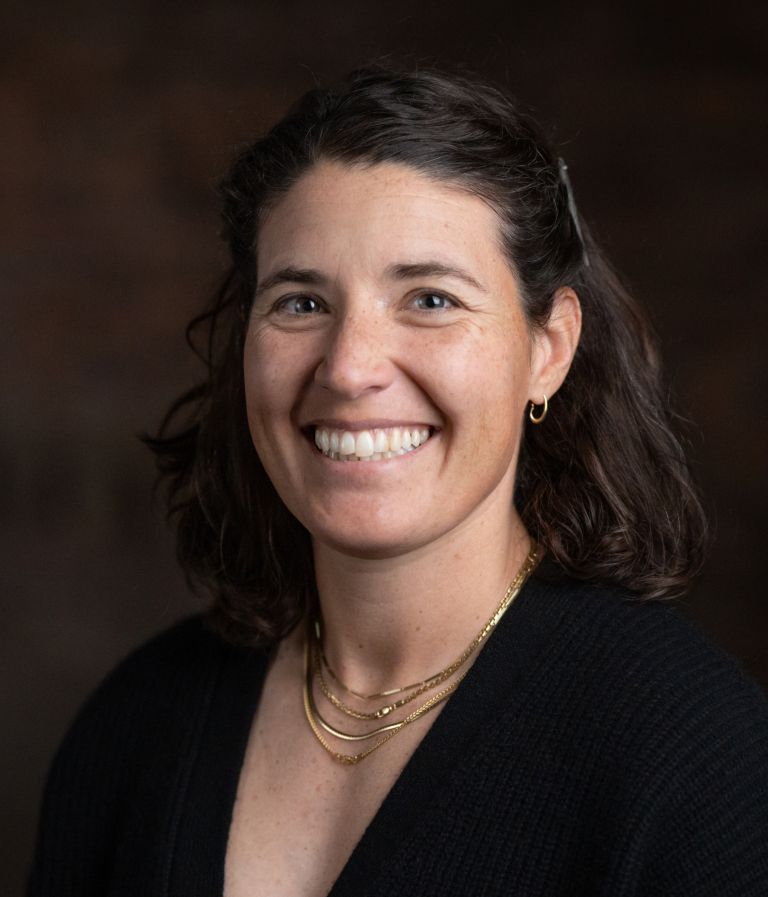
Alejandra Borunda (she/her) is a reporter on NPR’s Climate Desk, where she covers the intersection of climate change and health. She reports on how climate change is affecting people’s bodies and minds—and how people can, and are, protecting themselves and others.

Before Borunda joined NPR in 2023, she wrote about climate science and environmental issues for National Geographic, where she reported on glacier retreat in Greenland, shade and heat inequity in Los Angeles, climate change’s impact on ice fishing in the Great Lakes, and much more.

Media Fellow Publications
Healing is facilitated through safety, persistence, and trust.

  • Persistence: “People did not simply progress through this sequence and experience healing. The healing journey was a recursive, back and forth process. They found helpers, used the skills/resources that those helpers provided, found other helpers that provided more resources and used those skills and resources. As this process continued, people experienced a gradual amelioration of their suffering. Although many despaired at times, all demonstrated the quality of persistence—they refused to give up.”
  • Safety & Trust: “To connect to helpers, it was essential for people to feel safe in those relationships and able to trust that the person would be a helper and not a barrier to healing. Persons whose wounds included a violation of trust were especially careful about testing the safety of new relationships.”

Resources support us as we heal. They include reframing, responsibility, and positivity. “Making connections enabled participants to acquire and refine resources and skills that were essential in their healing journey. People also brought their own personal strengths to the journey.”

  • Reframing: “A particularly important skill was the ability to reframe—that is to look at suffering through a different lens.” This does NOT mean minimizing trauma or pain, but rather it often means the opposite: understanding what happened was wrong, unfair, or uncontrollable and that we are not to blame for it.
  • Responsibility: While we don’t have control over what happened to us, we are the only ones who can help ourselves heal. “A third essential resource that people acquired or refined was the ability to take an appropriate amount of responsibility for their healing journeys. They participated actively in the process of healing. Once again, some participants already had developed this skill, and some acquired or refined it from their helpers.”
  • Positivity: “Another resource that people acquired or refined during their healing journey was choose to be positive—that is to have some optimism about their situation.” People have varying predispositions to positivity. In the study, positivity was important in helping people heal. This doesn’t mean a toxic positivity, but rather simply finding some good in life and feeling hopeful about our situations.

“Connection to others was an essential part of all the healing journeys.” Humans are social creatures, and even the most introverted of us need close relationships. Friends and family add meaning and value to life and help support us, in good times and bad. 

When we experience relational trauma, relationships can feel scary, but reestablishing safety and trust in relationships is where the healing happens. (To be clear, we do not mean reestablishing safety and trust with abusers, but rather finding other healing relationships.) 

“When safety and trust had been established, people were able to connect with helpers. The nature of the behaviours of helpers that fostered healing ranged from small acts of kindness to unconditional love.”

  • “Moving from being wounded, through suffering to healing, is possible. It is facilitated by developing safe, trusting relationships and by positive reframing that moves through the weight of responsibility to the ability to respond.”
  • “Relationships with health professionals were among these but were not necessarily any more important to the healing journey than other kinds of helpers, which included family members, friends, spirituality and their God, pets, support groups, administrators, case workers and supervisors.”

Healing probably means different things to different people, but one definition that emerged from the study is: “The re-establishment of a sense of integrity and wholeness.” 

Healing was an emergent property that resulted from each individuals’ complex healing journey, a result of bridged connections between resources and relationships. “…they gradually found relief from suffering and began to exhibit emergent characteristics: a sense of hope, self-acceptance, and a desire to help others—the immediate precursors to healing.”

 In varying degrees, “they were able to transcend their suffering and in some sense to flourish.” 

  • Helping Others: We find meaning in helping others. “Understanding that suffering gives the strength and experience to help others in similar situations.”
  • Hope: We begin to have hope that we will not always feel this bad. A Crohn’s patient said, “I think gradually I realized that I was going to feel better. I did have days when I actually didn’t vomit, when I did feel better. And I think gradually I came to believe that maybe I could have a normal life again.”
  • Self-Acceptance: We see our inherent value and understand that we are not to blame for our suffering. A participant living with HIV said, “I’m really proud of myself. I think that now I still want to live. I don’t want to die, and I really love myself a lot. I have a lot of comfort in myself.”

Suffering is the ongoing pain from wounding. 

There is some debate about whether people always experience suffering on the path to healing.

Wounding happens when we experience physical or emotional harm. It can stem from chronic illness or by physical or psychological trauma for which we do not have the tools to cope, or a combination of those factors. 

“The degree and quality of suffering experienced by each individual is framed by contextual factors that include personal characteristics, timing of their initial or ongoing wounding in the developmental life cycle and prior and current relationships.”

Characteristics: How predisposed someone may be to wounding/how many tools and resources someone may have to deal with trauma/illness.

Lifestages: Developmental timing plays an important role in the impact of trauma — young children often do not have the same resources as older adults.

Relationships: Relationships can provide solace and support for those suffering, while lack of healthy relationships can prolong suffering.