

By Arianna Maysonave
December 1, 2025
"Nature gives us permission to let go of societal expectations and rediscover what it means to feel safe, present, and whole. There’s so much healing available to us, and we’re just starting to understand it."
Robert Zarr, Park Rx America
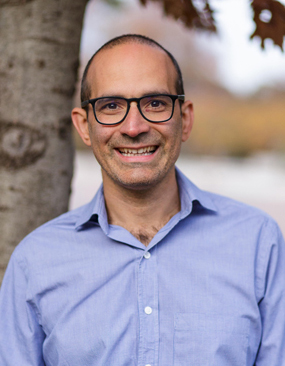
Robert is a physician researcher and public health pediatrician at Children’s Hospital of Eastern Ontario. Formerly at Unity Health Care, Inc., he has provided medical attention to BIPOC and immigrant populations for more than 20 years. Robert received his medical degree from Baylor College of Medicine, his Master of Public Health from the University of Texas School of Public Health, and completed his pediatric residency at Texas Children’s Hospital in Houston. Robert is part-time faculty at George Washington University and the University of Ottawa, as well as a certified nature and forest therapy guide. You will often find him walking or hiking on nearby trails and spending time near his neighborhood trees.
Park Rx America is a national nonprofit founded by Dr. Robert Zarr that helps health care providers “prescribe” time in parks and other natural places as a low-cost clinical intervention to prevent and treat chronic disease, boost mental and physical well-being, and foster environmental stewardship. The organization provides education and tools for clinicians, an electronic prescribing platform that delivers tailored park and nature prescriptions and reminder messages, and partners on research and public-facing campaigns to measure and scale the Park Rx model. Park Rx America also collaborates with organizations such as the Trust for Public Land and the Nature and Health Alliance to expand the broader Park Rx movement across the United States and internationally.
Q: I’d love to learn a bit more about yourself and how you came to this work. What did nature look like in your early life?
Robert Zarr (RZ): I come from a diverse background. My mother is Jewish with Eastern European roots, and my father immigrated from Iran in the 1950s. I spent my childhood in both Iran and the United States, never feeling fully connected to any one country or culture. That experience taught me to accept uncertainty and sparked a curiosity about other people and ways of life. I’ve always been someone who asks, “Why do we do things this way?”—a curiosity that drives everything I do.
I grew up in Austin, Texas, which is an outdoorsy place with lots of hiking, biking, and water sports nearly year-round. As a kid we spent most of our time outdoors—there was a forested area across the street, and there weren’t electronic devices to compete with our natural environment.
Q: Where did the vision for Park Rx America originate, and what prompted you to start it?
RZ: In 2010, I heard Dr. Rich Louv speak about the nature deficit at the American Academy of Pediatrics Annual Meeting in San Francisco. His ideas clicked instantly—I’d never heard nature framed as a tool for health before. Suddenly, everywhere I looked, I saw conversations about nature deficit. Living in D.C. near the U.S. Capitol and a vibrant neighborhood park, I saw the potential for nature to be part of health care. In 2010, I already had a child, and I was immersed in the wonder that young people bring through being so connected to their senses. There was also an interesting movement being launched through the National Parks Service called Healthy Parks, Healthy People.
Witnessing the epidemic of chronic stress and conditions like obesity, attention-deficit/hyperactivity disorder (ADHD), and prediabetes in children inspired me to look for low-cost, powerful interventions. Hearing Dr. Louv speak, combined with the research on nature’s benefits, made it clear that nature was an elegant solution. Few doctors were prescribing nature then, so I started Park Rx America (PRA) to create an organized way to do it, provide training, and build a platform that could scale nationwide.
Q: What does a park prescription look like in action?
RZ: The concept originated in Victoria, Australia. During a yearlong fellowship at the Institute at the Golden Gate, I inventoried park prescription efforts nationwide and wrote a report that highlighted our work in Washington, D.C. I focused on codifying park prescriptions in a way that mirrors medication prescriptions, with four components: place, activity, frequency, and duration.
Unlike traditional prescriptions, park prescriptions are co-produced with patients. The key is a collaborative conversation—asking where they feel safe outdoors, when they can go, whether they’d prefer headphones or company, and what activities they enjoy. This structured conversation helps patients realistically commit to a plan—30 minutes, an hour, or whatever fits their lives. The shared decision making in this dynamic is unique and different from a traditional medication prescription.
Once set, our platform sends automated reminders to patients, prompting them to follow through and log their visits. This uses principles of psychology and behavior change—like the stages of readiness—to keep patients engaged. Over time, this creates a tether between the patient and their health care provider through a co-produced commitment to spending time in nature.
Q: Wow, so interesting. I’m curious what the patient engagement rate is for these prescriptions. What evidence do you have?
RZ: Through a National Institutes of Health-funded five-year randomized trial investigating the changes among children ages 6-16 whose primary care providers co-produced nature prescriptions during routine office visits, preliminary results suggest an increase in moderate to vigorous physical activity, park visits, and time spent in parks—evidence of a causal effect.
We’ve applied for multi-center trials to explore not only outcomes but also the implementation science: what helps doctors keep prescribing? Surveys show doctors with a healthy relationship to nature are more likely to issue nature prescriptions, suggesting a strong correlation between providers’ personal practices and their professional behaviors. We’re looking to further this research in partnership with Kaiser Permanente in California.
We’re also piloting the “nature rep” concept—like a pharmaceutical representative, but for nature. We worked with a pre-med student who has collaborated with groups like the Transformational Prison Project and Thrive Behavioral Mental Health to bring indoor plants, nature photos, guided walks, and experiences directly to clinics. Our hypothesis is that frequent visits from a nature rep combined with exposing the health care staff to nature will promote integration of nature into both their personal lives and professional practice.
Q: What do the current activities of Park Rx America look like?
RZ: Today, we train health care professionals, provide resources for issuing nature prescriptions, and partner with organizations like the Trust for Public Land to expand our database of parks. Our platform lets providers access local green spaces and integrate park prescriptions into electronic health records. We’ve registered nearly 1,900 health care providers who have issued more than 7,000 prescriptions, leading to nearly 20,000 self-reported nature visits.
We also provide nature exposure and nature immersive experiences for health professionals to address their own nature deficit and burnout, believing that personal transformation is key to professional change.
Thanks to the Mental Insight Foundation, a collaborative project between El Centro de Corazón Community Health Center and PRA was able to provide nature enhancements, including indoor plants, nature photographs, and nature immersive experiences to their health care providers. Now, thanks to a Texas A&M Forest Service Community Forestry Grant, they will expand their scope of work from 20 health care providers to all 90 staff, including providers, nurses, and administrative staff. The clinic staff will plant and tend trees during their lunch breaks and participate in quarterly nature therapy experiences as part of their monthly staff meetings. It’s part of a larger strategy to focus not only on issuing nature prescriptions but also on supporting the mental health of health care professionals. How might nature exposure and experiences translate to changes in staff behaviors and attitudes, and ultimately to the health care they provide, including nature-based interventions?
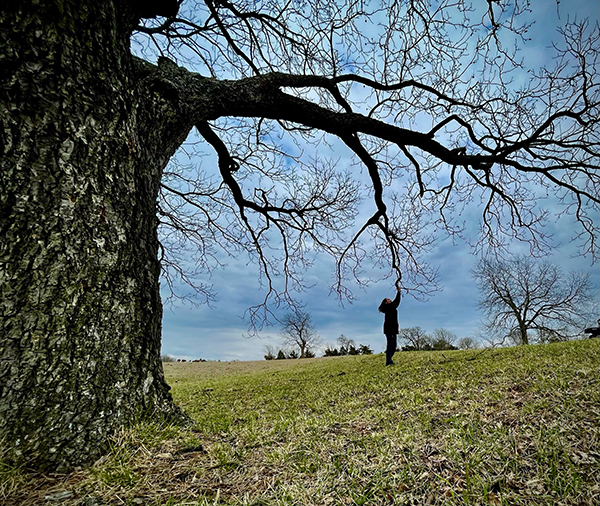
Motivating ourselves to go outdoors not only improves our own mental health and sense of well-being, but also increases our connection to the outside world, and the resultant enhanced nature connection may lead to environmental stewardship.
Photo: Chester Robinson, MD
Q: I can definitely see the connection between a practitioner’s own relationship with nature and how this might impact their likelihood to give park prescriptions. Knowing this, how do you work on building the capacity and resilience of these folks?
RZ: Great question—I actually became a Nature Therapy Certified Guide in 2020. I recently guided a group of 10 emergency department physicians in a nature therapy experience. It involved an opening, invitation-based circle, a moment of stillness to prime the system to receive, and a 90-minute nature experience that concluded with a tea ceremony.
At first, some participants were quite resistant to participate. Through my training, I learned that we are often masking important aspects of ourselves to get through our days and attend to all that must be done. When we slow down and connect to our mammalian selves—the rise and fall of the chest, the sound of our heartbeat—we come into contact with something both simple and profound. Noticing our bodies in space is incredibly grounding, and can offer a great deal of peace, calm, and clarity that extends beyond the bounds of the experience.
Taking time to be with oneself in this way supports practitioners in showing up for their patients with a greater sense of patience and presence. I want to support them in prioritizing a daily dose of proximate, nearby nature. It doesn’t have to be Yellowstone; it just has to be something that makes you stop in bewilderment of the magic and wonderment of life!
Q: What does nature offer when considered as part of health, medicine, and well-being?
RZ: Nature offers an essential blend of physical and mental health benefits. Personally, I’ve always loved being outdoors, but training as a certified nature therapy guide deepened my appreciation of how nature helps us quiet our frontal cortex, activate other parts of the brain, and find clarity and creativity. Nature reconnects us to our senses, grounds us, and gives balance to our overstimulated lives.
I’ve been thinking a lot about wandering and wondering, how digressing from the path and learning how to play again is part of what keeps our minds healthy, sharp, and creative. Tapping into awe and curiosity happens so naturally in the natural world—I do my best to get a little dose of this every day, and to carve out intentional space for more extensive opportunities to disconnect to reconnect. I walk the talk!
Q: How do you see nature exposure—or its absence—as part of both the mental and planetary health conversation?
RZ: It’s central. Chronic stress, burnout, and moral injury are rampant in health care professionals and society at large, fueled by disconnection from ourselves and nature. Time outdoors helps us reflect, regain balance, and reconnect. Without it, we’re more vulnerable to mental health struggles.
This connection with nature also feeds into how I think about planetary health. We can’t talk about human mental health without also talking about our relationship to the planet. I’ve worked on projects proposing reciprocal human and ecological restoration—when people plant and care for trees, they’re not just restoring ecosystems, they’re healing themselves too. That kind of relationship builds resilience.
I really believe the climate crisis is rooted in disconnection—from ourselves, from each other, and from the earth. When we lose that connection, we misplace our values. Nature should be at the center of how we live and make decisions. It’s about remembering how to be still, to listen to your heartbeat, to reconnect.
I’ve seen this in so many people—from teens who find peace lying on a rock in Rock Creek Park to health care professionals opening up during a nature experience. Nature gives us permission to let go of societal expectations and rediscover what it means to feel safe, present, and whole. There’s so much healing available to us, and we’re just starting to understand it.
Q: How do doctors find your program and integrate it into their practice?
RZ: Doctors often find us through conferences, word of mouth, or platforms like REI’s Cooperative Action Fund. Once connected, we provide training and a user-friendly tool to start issuing park prescriptions. Our platform can be embedded into electronic health records for easy integration into daily workflow. Ongoing reminders and data tracking help providers see their patients’ engagement with nature.
Q: How many practitioners have you trained, and what challenges remain?
RZ: We’ve registered nearly 1,900 health care providers across the United States, who have issued more than 7,000 nature prescriptions. Yet, sustaining regular prescribing remains a challenge. The biggest questions are what motivates providers to keep going and how to address barriers like burnout, competing demands, and lack of institutional support. Our research with over 150 providers explores these factors.
Embedding our platform into electronic health records and expanding our parks database through partnerships with groups like the Trust for Public Land are key strategies we’re pursuing.
Q: What is your vision for Park Rx America’s future?
RZ: I dream of seeing nature intervention as a routine part of health care—clinics filled with plants, bird songs, and a nature-rich environment that supports both staff and patients. I want wellness programs to include nature immersion alongside fitness and nutrition. We need more research on implementation, not just outcomes, to find the formula for success.
Ultimately, my goal is a world where nature connection is automatic—something we simply do because we understand its value.
Q: What gives you hope in these challenging times?
RZ: What gives me hope is exactly this—conversation. In a world where so many people are yelling past each other and reacting without reflection, I believe the path forward is through slowing down and having real, meaningful dialogue—especially with those we don’t agree with. I’m starting to see more of that: people engaging in tough conversations across divides, breaking out of siloes, and trying to understand different realities.
Despite everything, I still believe there’s so much good in humanity. My son often asks how my shift in the emergency department went, and I usually say it was great—not because the work is easy, but because I get to connect with real people dealing with real problems. That connection feels honest and purposeful, and it lifts me up—especially after hearing so much negativity in the news. It’s that human connection, and our miraculous connection with other species, that fills me with hope.
To create meaningful change, we need to start with self-reflection and self-care. Healthy, meaningful connection—with ourselves, with each other, and with the world—is where hope lives for me.
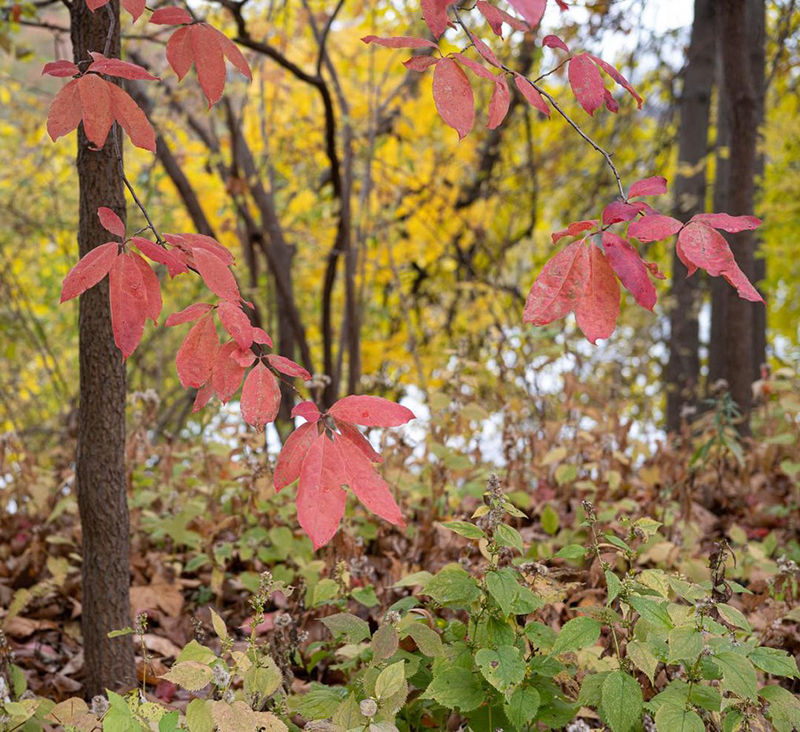
Our wishes…are: for more providers and patients to spend more time in nature, to close the gap in equitable access to nature, to reduce the burden of chronic disease by spending more time outdoors, and for more people to take action to slow and reverse climate change.
This interview is part of the Nova Institute for Health’s Insight Collaborative for Mental Well-Being project. The Insight Collaborative is supported by a generous seed grant from the Mental Insight Foundation.


